

Understanding Why Phosphates Matter for Pool Water
Have you ever been told your pool has high phosphates and wondered what that actually means?
Phosphates are a natural nutrient that can enter your pool from many different sources, including leaves, grass clippings, pollen, fertilizer, rainwater, dirt, and even some pool chemicals.
By themselves, phosphates are not harmful to swimmers, and they do not make your pool water cloudy.
So why do they matter?
The answer is simple—phosphates are food for algae.
If phosphates are present and your chlorine level drops too low, algae have everything they need to grow quickly. While chlorine is your pool’s primary defense against algae, reducing phosphates removes one of algae’s favorite food sources and helps make it easier to maintain a clean, clear pool.
How Do You Know If Your Pool Has High Phosphates?
Pools that constantly battle algae, use more chlorine than expected, or develop recurring green water may have elevated phosphate levels.
A simple phosphate test can determine whether treatment is needed.
Not every pool requires phosphate remover. If your water is clean, balanced, and holding chlorine properly, phosphates may not be causing any issues. However, if you’re struggling with algae or your phosphate levels are extremely high, treatment can make a noticeable difference.
How to Treat High Phosphates
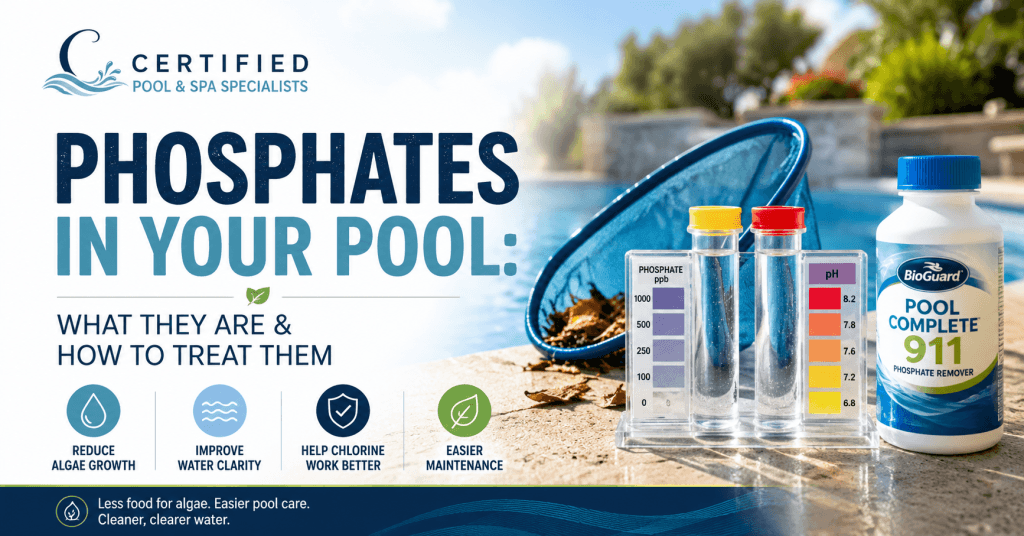
One of the easiest and most effective ways to reduce phosphates is with BioGuard Pool Complete® 911.
BioGuard Pool Complete® 911 helps:
- Remove phosphates from your pool water
- Improve overall water clarity
- Help chlorine work more efficiently
- Reduce the likelihood of algae growth
- Keep your pool cleaner with less effort
After adding the product, your pool filter captures the phosphates as they are removed from the water.
Depending on phosphate levels, your water may become slightly cloudy for a short time. This is completely normal and will clear as your filter does its job.
For pools with extremely high phosphate levels, more than one treatment may be necessary.
Preventing Future Problems
Keeping leaves, grass, pollen, and other debris out of your pool, maintaining proper chlorine levels, and routinely testing your water chemistry all help reduce the chance of algae problems.
Removing phosphates is another valuable tool that can make pool maintenance easier—especially during the hot South Texas summer months.
Need Help Treating High Phosphates?
If you’re struggling with recurring algae or think phosphates may be contributing to the problem, stop by Certified Pool & Spa Specialists.
We carry BioGuard Pool Complete® 911 and can help you choose the right treatment to keep your pool sparkling clean all season long.
Certified Pool & Spa Specialists
5642 Williams Drive
Corpus Christi, TX 78412
Hours: Monday through Friday, 10:00 a.m. to 5:00 p.m.
Call: (361) 993-7727